
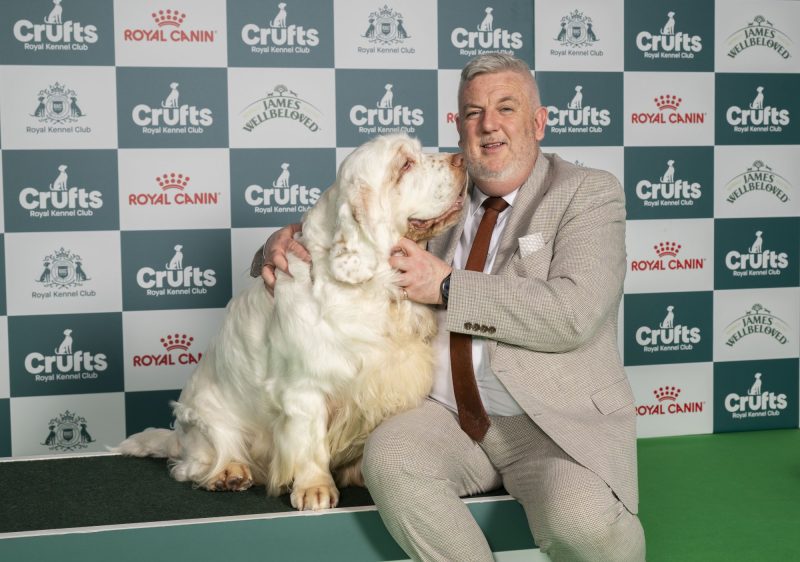
Still recovering from the disappointment of seeing a docked & cropped dog awarded Westminster Kennel Club’s “Best in Show,” only to be kicked while we’re down by yet another worrying win, this time at the prestigious Royal Kennel Club dog show, Crufts. After showing such promise over the past few years, introducing stricter guidelines for breeds predisposed to health conditions, and awarding top honors to functionally fit breeds like the Whippet and Australian Shepherd in 2025 and 2024, there was an almost audible gasp felt around the world when the 2026 Crufts Best in Show trophy was awarded to a seemingly visually-impaired Clumber Spaniel Sh Ch Vanitonia Soloist, aka “Bruin” on March 8th, 2026. Although Bruin is undoubtedly a very good boy, he does not set the standard for healthy breeding as high as we would have liked.
Arguably the greatest dog show in the world, with 22,000 dogs in attendance over four days, Crufts showcases the best of the best in dog grooming, agility, flyball, obedience, military & police work, and of course, breeding. Since its inception in 1891 by an ambitious traveling dog biscuit salesman by the name of Charles Cruft,1, 2 Crufts has set the tone for dog shows across the globe, and prides itself on being progressive and forward thinking, “evolving into a year-round community for every dog and owner.” Which is why it was such a shock to see a dog breed that is known to suffer from debilitating health conditions like pronounced entropion and ectropion (eyelids rolling inwards and outwards), hip & elbow dysplasia, intervertebral disc disease (IVDD), and pyruvate dehydrogenase phosphate 1 deficiency (PDP1), a genetic exercise intolerance disorder seen almost exclusively within the breed and carried by around 20% of the Clumber Spaniel population,3 take home the blue ribbon. The fact that Bruin was the winner of the ‘Gundog’ group, a category that includes breeds traditionally used to help hunters locate and retrieve game, seems decidedly ironic, given that his extremely hooded eyes would likely be of little use in searching through forests and fields!
The disproportionate back-to-leg-length ratio that predisposes the Clumber to spinal pain and disease was mirrored in the reserve best in show, a very cute but vertically challenged Basset Griffon Vendeen (Petit) Am/Cro/Fin/Int Ch* Black Majesty Some Say (Meghan, to her friends), leaving critics wondering why the judges chose to give the top prizes to dogs that are inherently at an increased risk of pain and suffering.
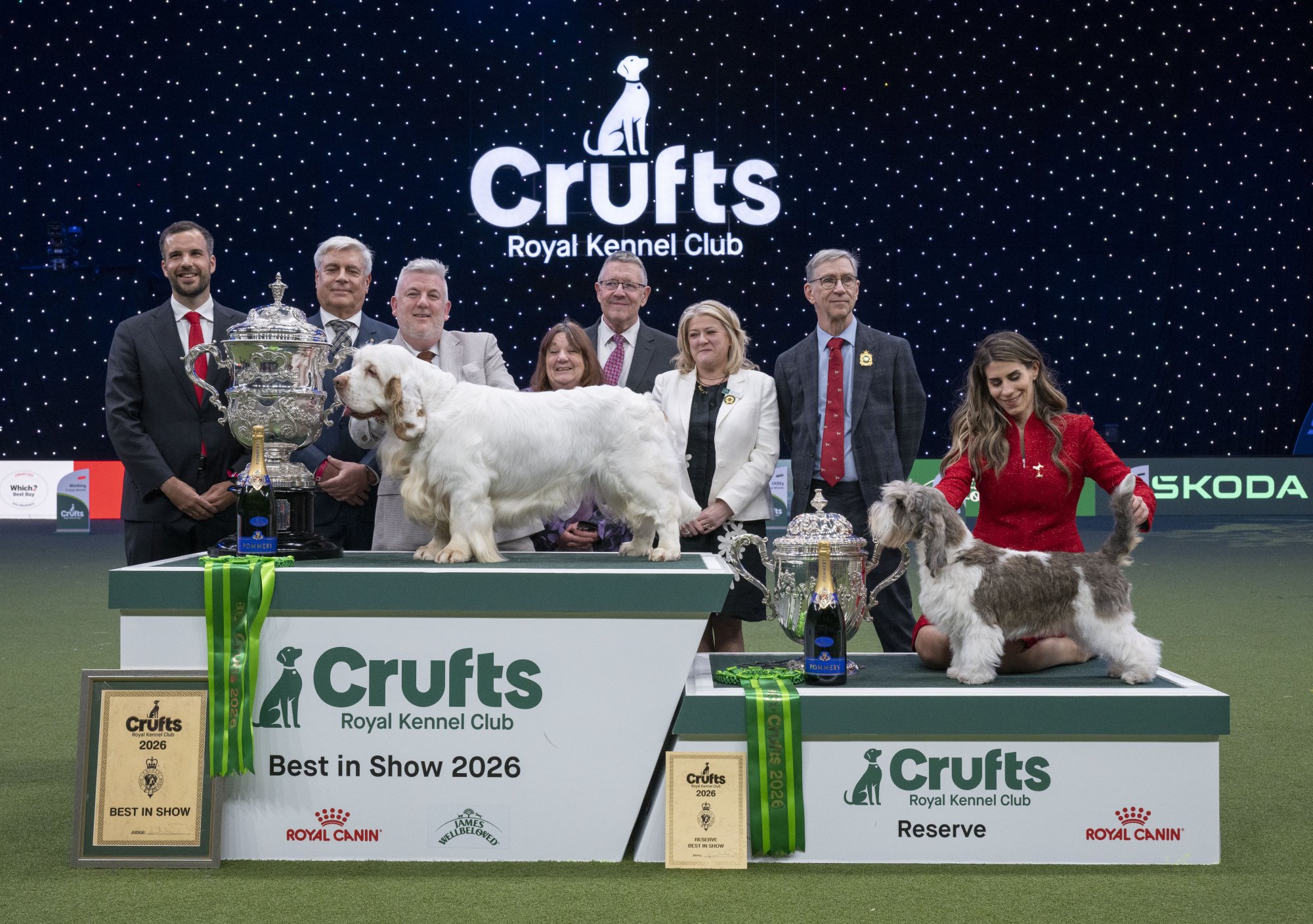
Please credit: Royal Kennel Club/BeatMedia
And if the disappointment surrounding breed choice wasn’t controversial enough, the scandal of Bruin’s win has been amplified by the revelation that his owner, Mr Lee Cox, a long-time dog breeder from Somerset, UK, had been previously convicted of animal cruelty for causing ‘unnecessary suffering’ to a breeding spaniel by neglecting him to the point that his ear was so chronically infected it had to be surgically removed. Although the conviction was from 2001, and reportedly an ‘isolated incident’, many feel that he should have been excluded from entering the competition, and prohibited from breeding dogs.
It seems a shame that, with the plethora of demonstrably fit, fearless, and talented dogs on display over the four-day event, the ultimate winner appears to have been chosen for their aesthetic appeal, rather than being a testament to healthy breeding choices. With several countries taking the somewhat extreme approach of banning certain dog breeds that are genetically predisposed to severe health problems, the suggestion that using a globally respected platform to set an example by celebrating dogs that aren’t plagued by extreme features like heavily folded eyelids, disproportionately long backs and short legs, flat faces, skin rolls, bug eyes or anatomical infertility doesn’t seem so far-fetched, does it, Crufts?
* Letters in front of a pedigree name usually represent titles earned for conformation (structure/appearance) or the breeder’s kennel name (prefix). Common examples include Champion (CH), Grand Champion (GCH), or country-specific, such as American (Am) or Canadian (Can) champion, indicating the dog’s accomplishments or bloodline origin.
Feature Image Source: Royal Kennel Club/BeatMedia, 2026
Did You Know?
- Our breaking news articles are included in our weekly emails. Don’t miss out on the latest and sign up for our newsletter below!