
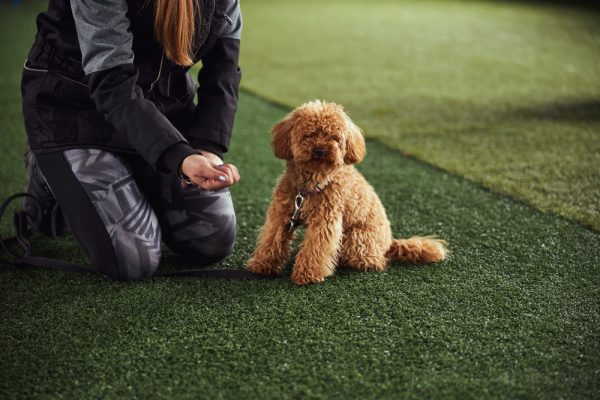
Training a skittish dog is one of the more humbling experiences in pet ownership. You try to comfort them, and they seem more anxious. You push them gently toward something new, and they shut down completely. Progress feels invisible for weeks, then suddenly something clicks. Understanding what’s actually happening beneath the surface changes everything about how you approach it.
Skittish behaviour in dogs almost always comes down to anxiety, usually rooted in past experiences that have conditioned a fear response to specific triggers. It’s common in rescue dogs, but it can happen with any dog, regardless of background. The good news is that with the right approach, most fearful dogs can make meaningful progress.
Start With Trust, Not Training
Before you can work on specific triggers or behaviours, your dog needs to trust you. That trust is built at home, quietly, through everyday interactions, even if the skittish behaviour mostly shows up on walks or around strangers. Being calm, consistent, and patient in low-stakes moments creates the foundation your dog needs to feel safe enough to cope when things get harder.
Part of building that trust is understanding what actually sets your dog off. It could be the doorbell, strangers approaching on walks, other dogs, loud noises, or even just you moving toward them too quickly. Identifying specific triggers matters because vague anxiety is almost impossible to address directly. Once you know what you’re dealing with, you can start working on each trigger deliberately and systematically.
Equally important is what you do when fear shows up. The instinct when a dog looks scared is to comfort them with cuddles and soothing words, and it feels like the kind thing to do. But this can actually reinforce the anxious behaviour by signalling that there really is something to worry about. A neutral reaction to fear, combined with enthusiastic praise and rewards when your dog shows even a flicker of calm confidence, is far more effective.
How to Actually Change the Response
The most reliable tool for shifting a fearful dog’s emotional response is classical conditioning, a technique that pairs a trigger with something the dog loves, repeatedly, until the trigger itself becomes a positive cue rather than a threat. A simple version of this at home: walk past your dog regularly and drop a high-value treat on the floor without stopping or making a fuss. Over time, your approach becomes something they look forward to rather than brace against. The same principle applies to visitors, strangers on walks, or whatever else triggers the anxiety.
The rewards you use in this process matter more than people realise. This isn’t the moment for dry kibble and a brief pat. Anxiety is deeply embedded, and overcoming it requires real motivation. Find what your dog values most, whether that’s a favourite treat, excited praise, or an intense game with a beloved toy, and use that specifically when they respond well to something that would normally frighten them.
Routine also plays a bigger role than it might seem. Dogs find predictability genuinely reassuring. Consistent feeding times, regular walks, and a stable daily pattern reduce the number of unknowns in your dog’s world, which lowers baseline anxiety and makes everything else easier to work on. And your own behaviour matters too. Dogs read their owners constantly. If you tense up when someone approaches on a walk, your dog notices. Acting calm, even when you don’t feel it, genuinely helps.

What Not to Do
Two things reliably make skittish behaviour worse, and both are completely understandable mistakes. The first is showing your own anxiety in triggering situations, which validates your dog’s fear and reinforces the idea that the threat is real. The second is scolding or reprimanding your dog for being afraid. It feels counterintuitive to ignore frightened behaviour, but punishing it adds another layer of negative association to an already difficult experience and can set back progress significantly. Ignore the anxious moments, reward the confident ones, and resist the urge to force exposure before your dog is ready.
When to Bring in Extra Help
If you’re not making progress on your own, professional support is worth pursuing sooner rather than later. A vet is a good first port of call, particularly because medication can sometimes reduce anxiety enough that other training techniques become far more effective. Once a dog isn’t in a constant state of high alert, they become much more able to learn.
A professional behaviourist or trainer with specific experience working with fearful dogs can also make a significant difference. Some will work with you in your home, which is often more useful for dogs whose anxiety is triggered by household situations. Others use their own calm, confident dogs as part of the process, allowing your dog to take cues from a more relaxed peer.
It’s also worth exploring calming supplements and pheromone-based aids, available as diffusers, sprays, and wipes, which can help reduce baseline anxiety while you’re doing the training work. Your vet can advise on what’s appropriate for your dog’s specific situation.
Rehabilitation rarely follows a straight line. There will be weeks with no visible progress and occasional days that feel like regression. Most fearful dogs take months to show meaningful improvement, and some will always have situations they find difficult. That doesn’t mean the effort wasn’t worth it. A dog who is more able to self-regulate, more trusting of their owner, and less reactive to the world around them has a genuinely better life, even if they still have hard days.
Summary
Skittish dogs aren’t broken; they’re anxious, and anxiety responds to patience, consistency, and the right approach. Build trust through calm daily interactions, identify specific triggers, and use classical conditioning with high-value rewards to change your dog’s emotional response over time. Reward confidence, not fear. Stay calm yourself, and don’t hesitate to bring in veterinary or professional support if you’re not making headway on your own.
Featured Image Credit: Svitlana Hulko, Shutterstock
Did You Know?
- Our brand-new posts are rounded up and included in our weekly emails. Don’t miss out on the latest – sign up for our newsletter below!